Modern physics continues to rigorously test Albert Einstein’s theory of general relativity. One of the most heavily scrutinized theoretical pillars is Lorentz invariance—the principle stating that the laws of physics remain identical in any direction throughout the universe. Numerous researchers actively seek anomalies to prove this principle breaks down at extreme scales, effectively disproving the renowned physicist.
The KM3NeT/ORCA Project in the Deep Sea
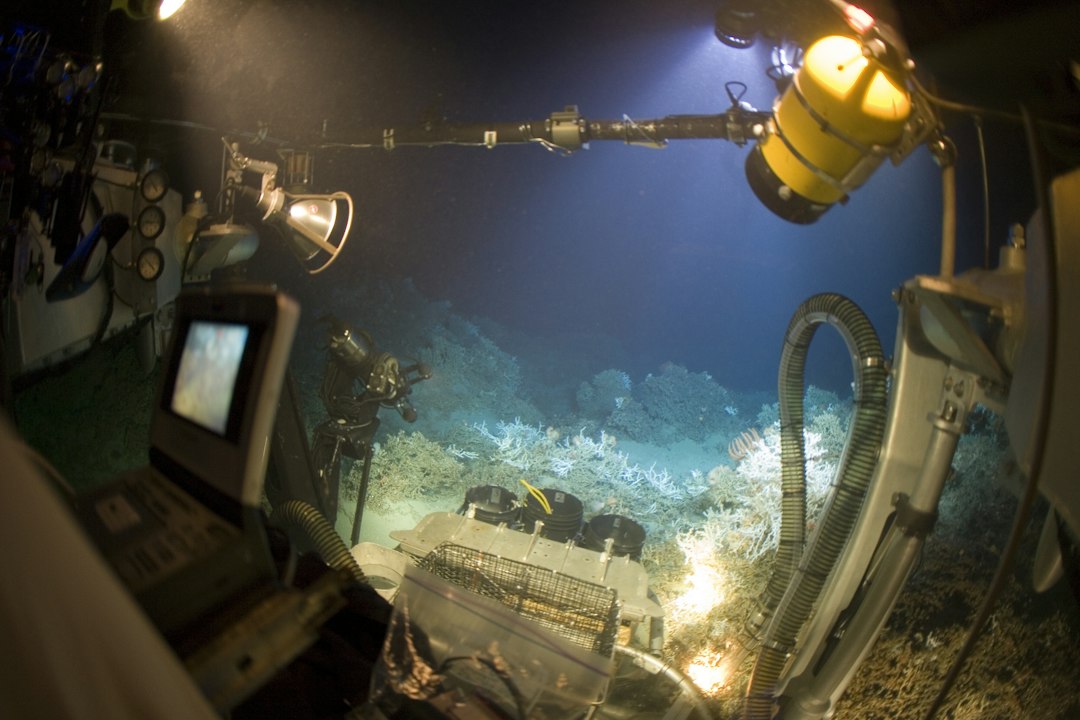
To test this hypothesis, an international team of scientists utilized the KM3NeT/ORCA underwater detector, located 2,450 meters beneath the surface off the coast of Toulon, France. In a recent study, the observatory analyzed 5.828 atmospheric neutrinos. These subatomic particles, characterized by extreme lightness and a lack of electrical charge, traverse the cosmos virtually without interacting with matter, serving as pristine cosmic messengers.
During their journey, neutrinos shift ‘flavors’ (electron, muon, and tau) through an oscillation process strictly governed by established physical laws. Upon interacting with seawater, they produce a faint, detectable blue Cherenkov light that allows scientists to track their origins and transformations.
Unprecedented Precision from the Ocean Floor
Despite utilizing only 1.4 years of data from its initial operational units, the submarine telescope matches the precision of veteran detectors like Antarctica’s IceCube or Japan’s Super-Kamiokande. Preliminary findings confirm that the properties of the detected neutrinos do not violate Lorentz invariance.
Next Steps in the Research
- Data analysis from the ARCA detector, ORCA’s sister facility located 3,500 meters deep off the coast of Sicily, specializing in high-energy neutrinos from deep space.
- Evaluation of potential physical variations under even more extreme energetic conditions.
Thus, while the scientific community keeps searching for flaws in Einstein’s framework, the theory of relativity successfully withstands the pressures of contemporary experimental physics.